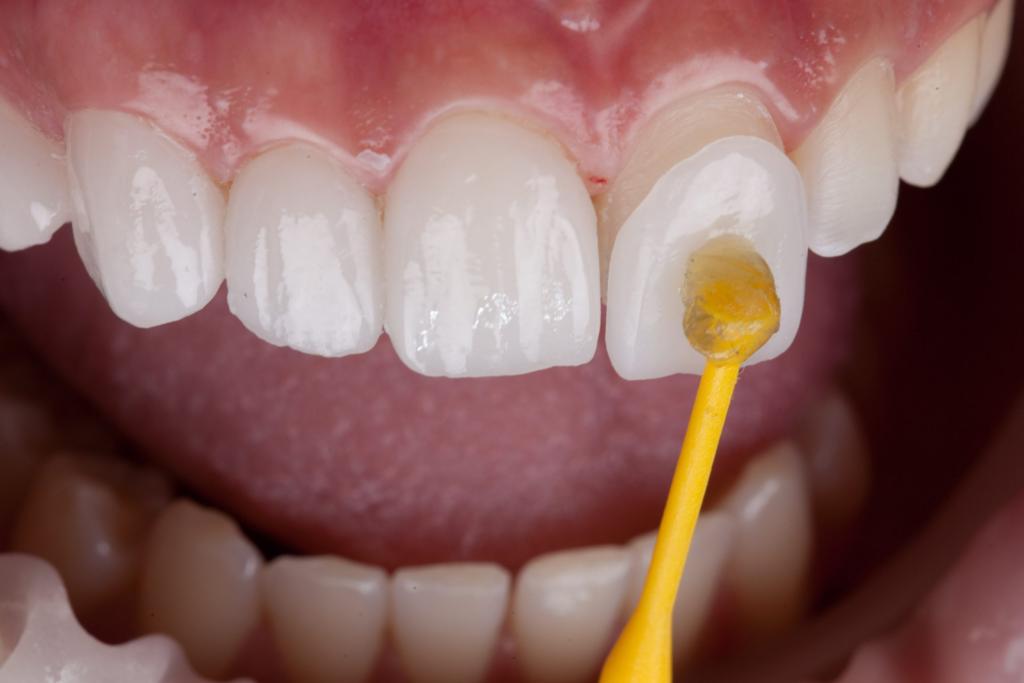
It’s one of the most common questions cosmetic dentists hear: “Instead of spending a year or two in braces, can I just get veneers to straighten my smile?” It’s an appealing idea. Veneers can transform a smile in as little as two appointments. Braces require months of treatment. But the answer isn’t a simple yes or no — it depends entirely on the type and degree of your misalignment.
Let’s break down when veneers can effectively address crooked teeth, when orthodontics is the better path, and when combining both gives you the best result.
How Veneers Can Correct Mild Misalignment
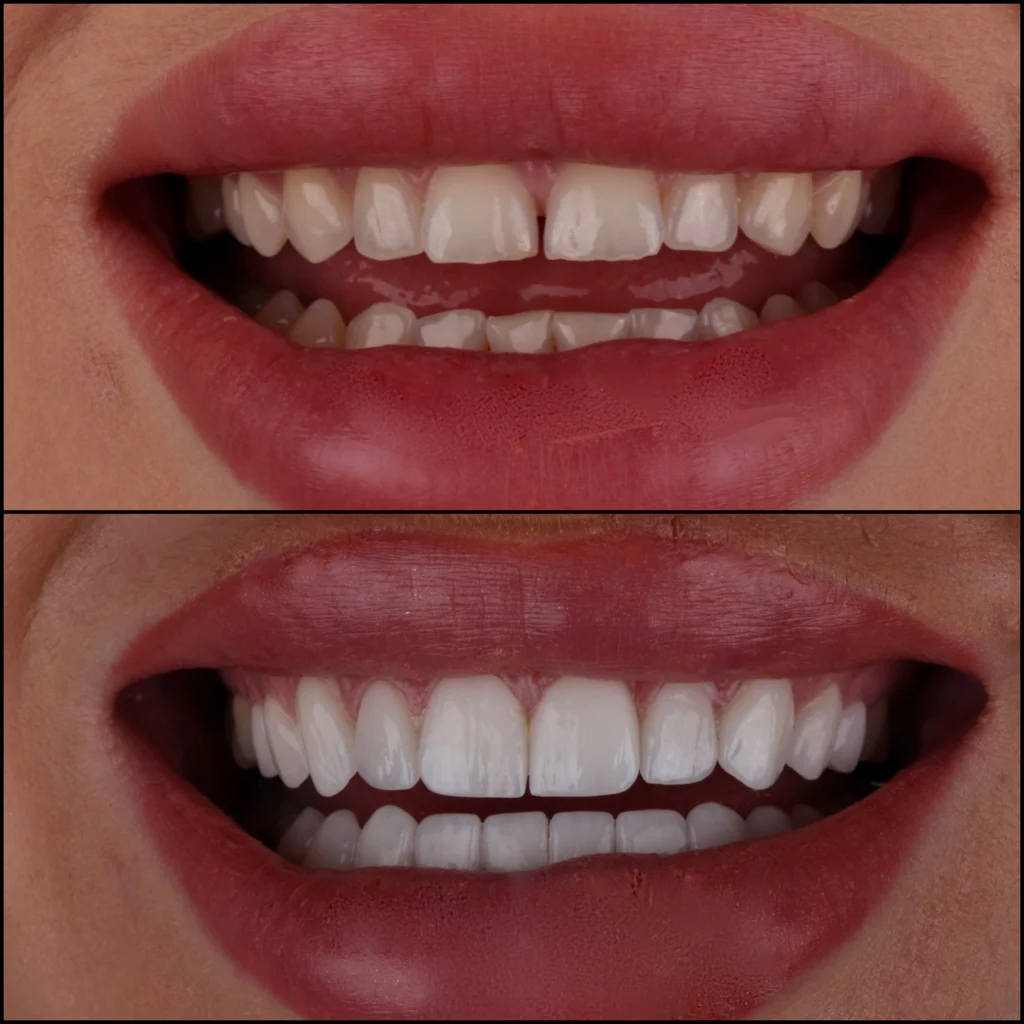
Porcelain veneers — thin shells bonded to the front surfaces of your teeth — can create the illusion of perfectly straight teeth by altering their shape, size, and angle. For mild cosmetic concerns, veneers can be remarkably effective.
Veneers may be a good option if you have minor crowding or slight overlapping of the front teeth, small gaps between teeth that you’d like closed, one or two teeth that are slightly rotated or angled, and uneven tooth edges or asymmetrical shapes.
In these cases, veneers can reshape the visible surfaces to create a straight, uniform smile line without moving the actual teeth. The results are immediate, the process is minimally invasive, and the outcome can be stunning.
When Veneers Are Not the Right Solution
Veneers work on the surface. They don’t change the position of your teeth or the alignment of your bite. For moderate to severe misalignment, veneers alone are not appropriate — and forcing them into this role can lead to problems.
Significant crowding: If teeth severely overlap, placing veneers would require removing excessive amounts of natural tooth structure to create a flat surface. This weakens the teeth and creates an unnatural appearance.
Bite problems (malocclusion): If your upper and lower teeth don’t meet correctly — such as an overbite, underbite, or crossbite — veneers won’t fix the functional issue. You’ll still have bite problems that can cause uneven wear, jaw pain, and further dental issues down the road.
Severely rotated teeth: A tooth that’s significantly rotated in its socket can’t be camouflaged with a veneer alone. The thickness required would look bulky and unnatural.
The Best Approach: Orthodontics First, Veneers Second
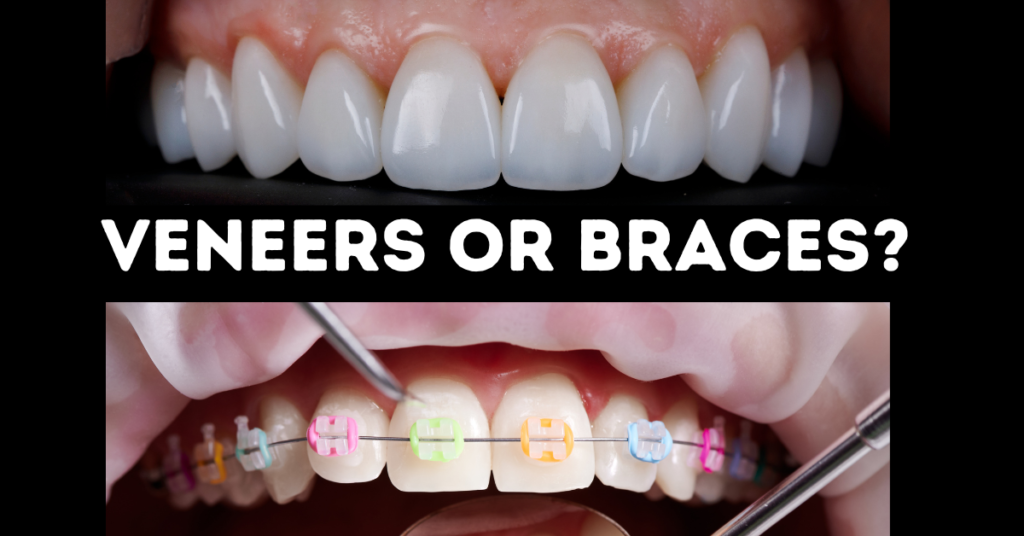
For many patients, the best smile transformation involves doing both — but in the right order. Here’s why this combination often produces the most beautiful and longest-lasting results:
Step 1 — Orthodontics (braces or clear aligners): Moves your teeth into their ideal positions, corrects your bite, and creates a solid foundation.
Step 2 — Veneers (after orthodontics is complete): Refines the cosmetic details — perfecting color, shape, symmetry, and surface texture to create a flawless finish.
Think of it this way: orthodontics builds the structure, and veneers provide the polish. When teeth are properly aligned first, less natural tooth structure needs to be removed for veneer placement, the veneers can be thinner and more conservative, the result looks more natural, and the veneers last longer because biting forces are evenly distributed.
Emax Veneers vs. Composite Veneers for Crooked Teeth
Emax (porcelain) veneers are the gold standard for cosmetic transformations. They offer superior translucency (mimicking natural enamel), exceptional durability, and resistance to staining. They’re ideal when you want a long-lasting, premium result.
Composite veneers are more affordable and can be applied in a single visit. They’re a good option for minor corrections or for patients who want a reversible approach. However, they don’t last as long and may require more maintenance over time.
Your choice between the two depends on your goals, budget, and the specific condition of your teeth. This is a conversation your dentist should walk you through in detail during your consultation.
What About Clear Aligners Instead of Traditional Braces?
If the thought of metal braces is what’s pushing you toward veneers, consider clear aligners as a middle ground. Clear aligners are nearly invisible, removable for eating and cleaning, and highly effective for mild to moderate alignment issues. For many patients, aligners achieve the straightening they need in 6–18 months, after which veneers (if still desired) can perfect the aesthetic details.
Our Approach at Lebanon Dental Studio
At Lebanon Dental Studio, Dr. Rita Kanbar’s background in both aesthetic and prosthetic dentistry makes her uniquely qualified to guide you through this decision. She won’t simply recommend veneers to save time if orthodontics would give you a better long-term outcome. And she won’t insist on braces if your misalignment is mild enough for veneers alone.
During your consultation, she’ll assess the degree of misalignment, your bite, the health of your existing teeth, and your aesthetic goals — then recommend the approach that delivers the most natural, lasting, and beautiful result for you.
| Experiencing any of these symptoms? Book a consultation at Lebanon Dental Studio. Dr. Rita Kanbar and her team are here to help. Call or WhatsApp: +961 71 677261 |