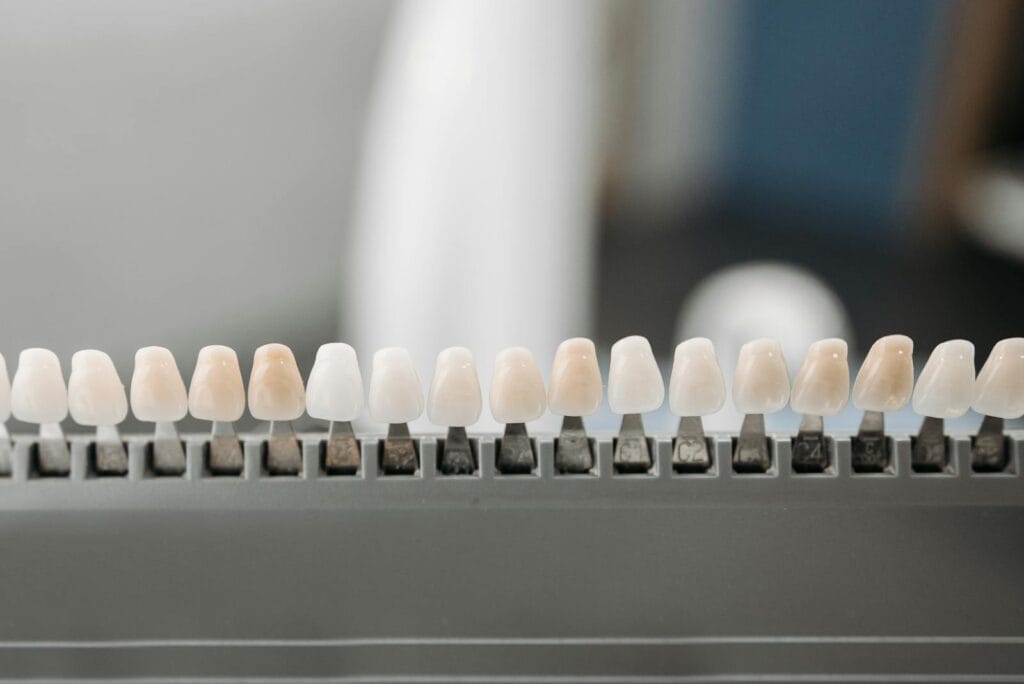
Choosing between zirconia and E.max is one of the most important decisions in any veneer or crown treatment. Both are excellent materials, but they serve different purposes. At Lebanon Dental Studio, Dr. Rita Kanbar helps patients choose the right material based on their specific needs, bite, and aesthetic goals.
E.max: The Gold Standard for Aesthetics
E.max (lithium disilicate by Ivoclar Vivadent) is a glass-ceramic known for its exceptional translucency. It mimics natural tooth enamel better than any other dental material currently available.
Best for: Front teeth (incisors and canines) where appearance matters most. Ideal for patients who want their veneers to look indistinguishable from natural teeth. Also excellent for thin, minimal-prep or no-prep veneers.
Strength: Around 400 MPa flexural strength. Strong enough for anterior teeth but not ideal for heavy biting forces on molars.
Longevity: 10 to 15 years or more with proper care.
Zirconia: Maximum Strength and Durability
Zirconia (zirconium dioxide) is a crystalline ceramic with outstanding strength. Modern multilayer zirconia has dramatically improved in aesthetics compared to earlier generations.
Best for: Posterior teeth (premolars and molars), patients who grind their teeth (bruxism), implant-supported restorations, and full-arch cases like All-on-4 where strength is critical.
Strength: 900 to 1200 MPa flexural strength, roughly three times stronger than E.max.
Longevity: 15 to 20 years or more. Virtually fracture-proof under normal conditions.
Side-by-Side Comparison
Aesthetics: E.max wins. Its glass-like translucency is unmatched. Multilayer zirconia comes close but still lacks the depth of natural enamel that E.max achieves.
Strength: Zirconia wins. Three times stronger, better for grinding, clenching, and posterior teeth.
Tooth preparation: E.max allows thinner veneers (0.3 to 0.5 mm), preserving more natural tooth. Zirconia typically requires slightly more preparation.
Cost: Comparable in Lebanon. Zirconia may be slightly less expensive depending on the lab and the specific product line.
What Dr. Rita Kanbar Recommends
In most Hollywood smile cases, Dr. Rita uses a combination approach: E.max for the front six to eight teeth where translucency matters, and zirconia for the premolars and any posterior crowns where strength is needed. This gives you the best aesthetics where people see your smile and the best durability where your bite needs it.
For patients with bruxism, zirconia is often the safer choice across all teeth. For patients with minimal alignment issues who qualify for no-prep veneers, E.max is typically ideal.
Zirconia vs E.max: Full Comparison Table
| Feature | E.max (Lithium Disilicate) | Zirconia |
|---|---|---|
| Flexural Strength | ~400 MPa | 900 – 1,200 MPa |
| Aesthetics | Excellent – closest to natural enamel | Very good – modern multilayer approaches natural |
| Translucency | High – glass-like depth | Moderate – improving with each generation |
| Minimum Thickness | 0.3 – 0.5 mm | 0.5 – 0.8 mm |
| Best Position | Front teeth (incisors, canines) | Back teeth, full-arch, implant-supported |
| Bruxism Suitability | Not ideal – risk of fracture | Excellent – virtually unbreakable |
| Longevity | 10 – 15+ years | 15 – 20+ years |
| Relative Cost in Lebanon | Slightly higher (~1.2x) | Baseline (1x) |
| Ideal Patient | Aesthetic-focused, minimal-prep cases | Strength-focused, grinders, posterior teeth |
Case Examples: When Each Material Is the Right Choice
Choosing between zirconia and E.max is not about which material is “better” — it is about which is better for you. Here are some common scenarios that illustrate the decision-making process.
Case 1: Full Hollywood smile, no grinding habit. A patient wants 20 veneers for a complete smile transformation. They have no history of bruxism and their bite is well-aligned. Dr. Rita would typically recommend E.max for the front 6 to 8 teeth for maximum translucency and zirconia for the premolars where biting forces are greater. The result is a smile that looks completely natural up close while being durable throughout.
Case 2: Patient with severe bruxism. A patient grinds their teeth at night and has already cracked a previous set of porcelain crowns. In this case, full-contour zirconia across all teeth is the safest choice. Modern multilayer zirconia can still achieve very good aesthetics, and the strength benefit far outweighs the slight reduction in translucency compared to E.max.
Case 3: Implant-supported full arch (All-on-4). A patient receiving a full arch of teeth on four implants needs a prosthesis that can withstand constant biting forces across the entire jaw. Zirconia is the standard choice for All-on-4 prosthetics because of its fracture resistance and longevity.
Case 4: Minimal-prep veneers on front teeth only. A patient with minor cosmetic concerns (slight discolouration, small gaps) wants ultra-thin veneers on 6 front teeth without significant tooth reduction. E.max is ideal here because it can be fabricated as thin as 0.3 mm while still providing excellent aesthetics and colour masking.
Case 5: Single crown on a molar. A patient needs a crown on a back tooth after root canal treatment. Zirconia is the clear winner — its strength protects the weakened tooth, and aesthetics are less critical in the molar region where the crown is barely visible.
Want to know which material is right for you? WhatsApp us at +961 71 677 261 or book a consultation at our Jal el Dib clinic.